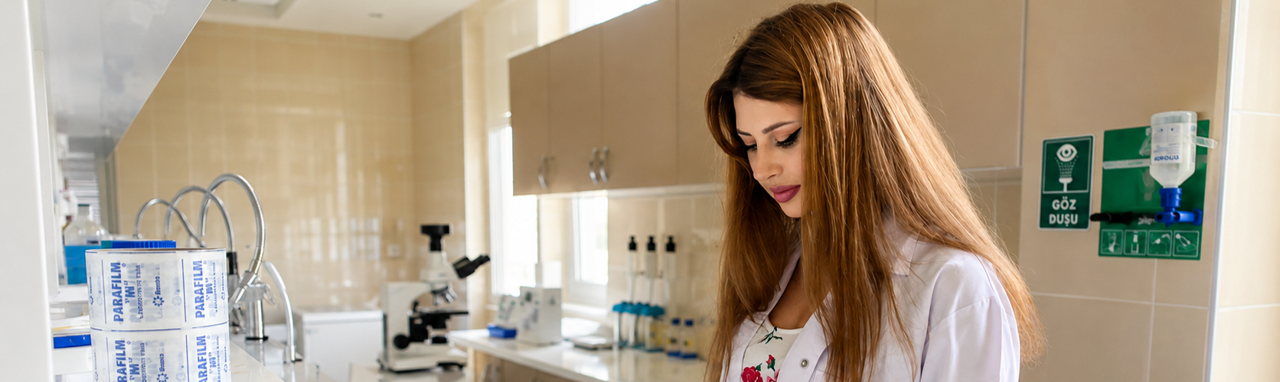
Gülizar Pınar is a seed registration specialist working for a seed company based in Ankara, Türkiye. She earned her bachelor’s and master’s degrees from Çanakkale Onsekiz Mart University before completing her PhD at Ankara University.
During her doctoral studies, she contributed to a multidisciplinary cereal research project while continuing her professional career in the seed industry. Her research on haploid seed production in maize resulted in a peer-reviewed publication and a utility model patent for a method developed to increase haploid seed formation.
In this conversation, we discuss her academic and professional journey, her future goals, and how she successfully balanced doctoral research with a full-time career in the seed industry.
Özgür: What motivated you to pursue a PhD in Field Crops?
Gülizar: During my undergraduate studies in Agricultural Biotechnology, I became involved in maize breeding through research on the protein content of local maize populations and related laboratory analyses. Observing how genetic variation at the molecular level translates into agricultural performance had a profound impact on me.
During my master’s studies, I joined my co-supervisor’s research projects and transitioned to the Department of Field Crops, where I focused on haploid seed production in maize. This experience showed me that scientific research is not only about generating theoretical knowledge but also about developing innovative solutions to agricultural challenges.
I therefore decided to pursue a PhD in Field Crops to deepen my expertise in plant breeding, work with different crop species, and contribute to agricultural production through scientific research.
Özgür: How did your interest in maize breeding develop?
Gülizar: Maize is one of the world’s most strategically important crops for food security, and its yield potential continues to improve through breeding. My interest began during my undergraduate education and became much stronger through the research I conducted during my master’s studies.
My research focused mainly on haploid technologies. I characterized pollen from haploid inducer maize lines, examined pollen grains of different sizes, and conducted SDS-PAGE analyses. Based on these studies, we developed a method to enhance haploid seed formation. Our findings were published and subsequently protected through intellectual property rights.
This experience demonstrated how scientific discoveries can be translated into practical applications. My interest in maize breeding gradually developed from scientific curiosity into a professional area of expertise.
Özgür: How was the experience of doing a PhD while working?
Gülizar: Pursuing a PhD while working full-time was one of the most demanding, yet rewarding, periods of my career. While managing variety registration, seed certification, import–export operations, and regulatory procedures in the private sector, I was also conducting field trials, laboratory experiments, and doctoral research.
I could take only one day of administrative leave each week. To keep my research on schedule, I often spent weekends in the laboratory and worked on my dissertation after regular working hours. This required discipline, careful planning, and effective time management.
Looking back, my PhD provided me with much more than academic knowledge. It significantly strengthened my project management, problem-solving, and organizational skills, which later became valuable in both my scientific and professional work.
Özgür: What was the main focus of your PhD research?
Gülizar: My doctoral research focused on Tritipyrum, a trans-chromosomal hybrid cereal developed by crossing Triticum durum with Thinopyrum bessarabicum. The study was conducted as part of a multidisciplinary research project funded by TÜBİTAK.
One of the most significant aspects of the project was that Tritipyrum was comprehensively investigated in Türkiye for the first time. Adaptation trials were conducted across different ecological regions to evaluate its growth performance, environmental adaptability, and tolerance to abiotic stresses, particularly drought and salinity.
I also supported the agronomic findings with molecular cytogenetic analyses. Using Genomic In Situ Hybridization (GISH) and Fluorescence In Situ Hybridization (FISH), I examined chromosome structures and ploidy levels to better understand the cytogenetic characteristics and genome organization of Tritipyrum.
The project demonstrated the value of integrating conventional plant breeding with advanced molecular techniques and gave me the opportunity to collaborate with researchers from several disciplines.
Özgür: Why is haploid seed production important in maize breeding?
Gülizar: Haploid seed production is the first and most critical step in Doubled Haploid technology. Producing sufficient numbers of haploid seeds allows breeders to generate completely homozygous inbred lines much faster than through conventional self-pollination.
During my master’s research, I focused on increasing haploid seed formation. By classifying pollen grains from haploid inducer maize lines according to their size, we found that pollination with smaller pollen grains significantly increased the haploid induction rate.
As a result, we developed an innovative method that enables the production of more haploid seeds from the same hybridization combination. Our findings were published in a peer-reviewed journal and protected through a utility model patent.
Seeing the research produce both scientific and practical outcomes reinforced my belief that academic work can make meaningful contributions to plant breeding.
Özgür: What was the most challenging part of your PhD journey?
Gülizar: One of the greatest challenges was coordinating a multidisciplinary research project conducted across Türkiye and involving researchers from several areas of expertise. Integrating field experiments, laboratory analyses, and molecular cytogenetic studies required continuous planning and coordination.
Advanced techniques such as GISH and FISH also required specialized facilities and lengthy optimization processes. At the same time, adaptation trials were being conducted across different regions, creating a large and complex dataset.
Managing these responsibilities while working full-time in the seed industry made time management even more important. Although the schedule was demanding, the experience helped me become a more versatile researcher and professional.
Özgür: How did your PhD change you as a researcher?
Gülizar: My PhD transformed not only my scientific knowledge but also the way I approach problems. I now analyze challenges more systematically, establish clearer cause-and-effect relationships, formulate stronger research questions, and interpret data from a broader perspective.
This mindset also benefits my professional career. In variety registration, seed certification, import–export operations, and regulatory affairs, I can approach complex processes analytically and develop evidence-based solutions.
For me, earning a PhD represents much more than obtaining an academic qualification. It has been a journey of intellectual and personal growth. Gaining first-hand experience in both academia and the private sector has helped me understand the priorities, expectations, and working cultures of both environments.
Özgür: How do you connect academic research with practical breeding work?
Gülizar: My academic research and professional responsibilities focus on different areas. During my PhD, I conducted fundamental research on Tritipyrum using molecular cytogenetic approaches. In industry, my work involves variety registration, seed certification, import–export operations, Distinctness, Uniformity and Stability trials, Value for Cultivation and Use trials, and the introduction of new crop varieties into Türkiye.
Although I do not directly use the plant material from my doctoral research in commercial breeding, the skills I developed through scientific thinking, experimental design, analytical reasoning, and evidence-based problem-solving help me manage technical and administrative processes more systematically.
Industry experience also enriches my academic perspective. Working closely with growers, seed companies, and other stakeholders gives me a clear understanding of practical needs and real-world challenges.
For this reason, I see myself as a bridge between academia and industry. My strength lies in understanding both environments and connecting scientific knowledge with practical agricultural applications.
Özgür: What does success mean to you at this stage of your career?
Gülizar: For me, success cannot be measured only by academic titles, publications, or completed research projects. True success means generating knowledge that creates tangible value for people, agricultural production, and the national economy.
Scientific research becomes more meaningful when its outcomes reach producers, address the needs of the agricultural sector, and are translated into practical applications. Similarly, challenges experienced in industry should help shape future academic research.
Ultimately, success means strengthening collaboration between academia and industry, supporting the transfer of scientific knowledge into practice, and creating sustainable value for agriculture.
Özgür: What advice would you give to young agricultural engineers or graduate students?
Gülizar: First, never lose your curiosity. Science advances through the courage to ask meaningful questions. Not every experiment produces the expected result, but unexpected outcomes and setbacks often provide some of the most valuable lessons.
I also recommend looking beyond academic research. It is important to understand the realities of farming, the needs of producers, and the expectations of the agricultural industry.
Continuous self-improvement is equally important. Following international scientific literature, embracing lifelong learning, and collaborating across disciplines can significantly strengthen both scientific and professional development.
Above all, be patient. Scientific research is a long-term journey that requires dedication, perseverance, and a strong commitment to ethical principles.
Özgür: What are you currently working on?
Gülizar: I currently work in the private seed sector, collaborating with international seed companies to introduce new crop varieties into Türkiye. My responsibilities include evaluating the adaptation of new varieties, managing variety registration and seed certification processes, coordinating Value for Cultivation and Use trials, and overseeing import, export, and marketing activities.
I also manage technical and regulatory procedures with the Ministry of Agriculture and Forestry and the Seed Registration and Certification Center, ensuring that all legal and technical requirements are fulfilled efficiently.
My long-term goal is to continue contributing to scientific research while helping translate academic knowledge into practical applications. I hope to support the advancement of plant breeding and the seed industry in Türkiye by strengthening the connection between scientific innovation and agricultural practice.
Özgür Altundaş:
It was a great pleasure speaking with you and learning from your
experiences. I hope this interview has been valuable not only for me but
also for our readers.
I also hope our paths will cross again in the future, perhaps through a
research collaboration or at another stage of our professional careers.
Thank you once again for this enjoyable conversation. I wish you
continued success in your work and in all your future endeavors.